Imagine hearing that at a check-in counter. Not at some budget carrier you booked at 1am on impulse. At any airline. From any human being working any desk, and I am genuinely not sure what you are supposed to do when the person holding the boarding pass just shrugs at you. You would stare. You would ask them to repeat it. You would look around to see if anyone else was noticing this. Because the bag is packed. The flight is in forty minutes. You are not carrying a surfboard or a cello case or a small horse. You are carrying... your things. The things you need for the trip. And the person at the counter is telling you that the container of your preparation is the problem.
This would be beyond belief. For you or anyone.
So why is it so acceptable when a patent drafting tool throws an error and says: only PDF and Word Doc accepted?
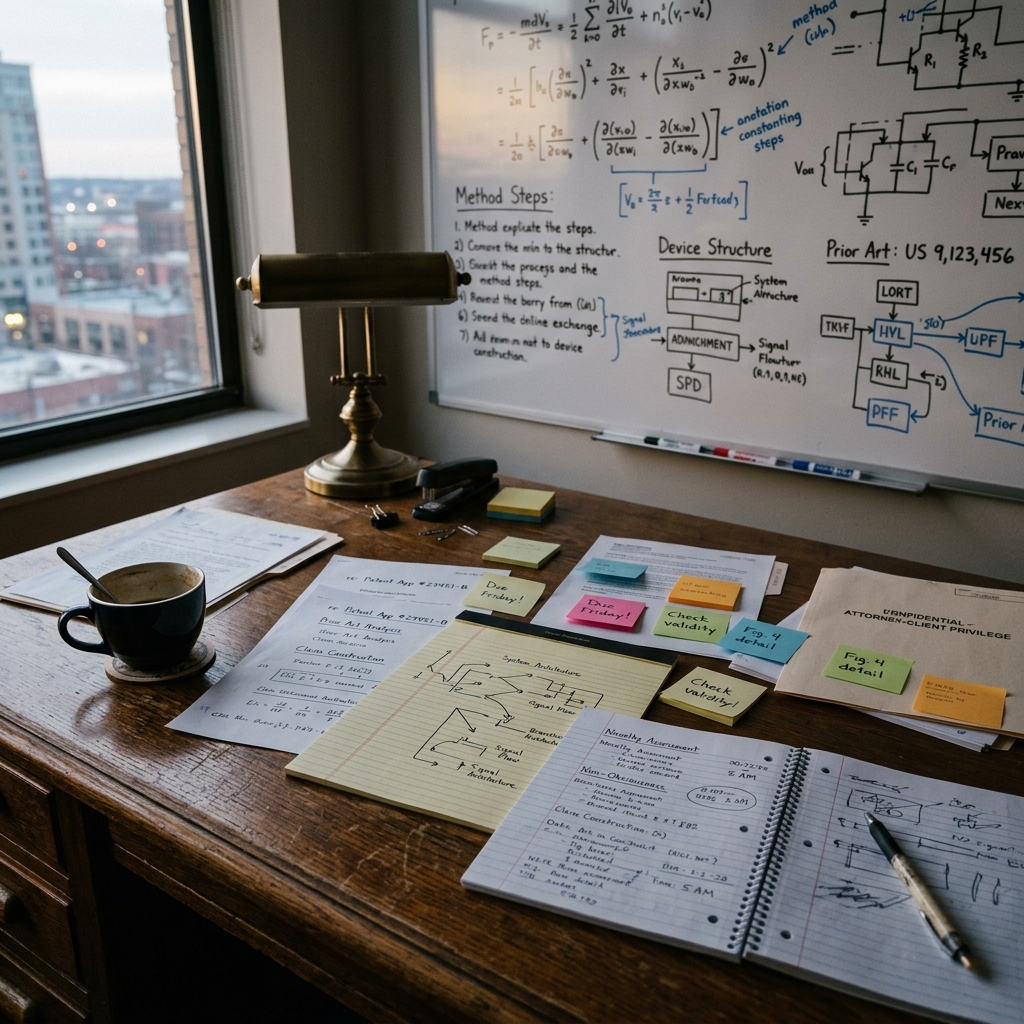
Here is what a patent attorney actually arrives with. Not what the tool expects. What the attorney actually has.
An email chain from seven months ago where the breakthrough was mentioned in paragraph four; almost as an afterthought. The inventor was writing to a colleague about something else entirely. The crucial sentence is buried in the middle of a paragraph about scheduling: "...also tried flipping the process and it worked better; not sure why yet." That is the whole thing. That is the novel claim. In a sentence the inventor themselves had half-forgotten by the time the attorney called.
A photograph of a prototype. Taken on a phone. In a lab. Slightly blurry on one edge because someone's hand was in the frame. The prototype is balanced on a paper cup. There are coffee rings on the workbench behind it. This photograph is irreplaceable because the prototype no longer exists in that configuration; it was disassembled three weeks later and rebuilt differently. The photograph is the only record of the thing that worked.
A WhatsApp voice note. Recorded at 11pm. Three minutes and forty seconds. The inventor explaining the one thing that makes this novel, the way only the person who built it can explain it... not carefully, not for a record, not with the precise vocabulary of a patent claim, but thinking out loud in the way people do when they are finally saying the thing they have been trying to articulate for months.
That is what the attorney arrives with. That is the invention.
The tool says: structured fields only. Maximum 20 MB.
That is not a tool helping an attorney. That is a tool creating work for an attorney so it can then help them; on its own terms.
I spoke to three attorneys about this. Independently. Over two months. All three described the same thing without being prompted to compare notes.
One attorney in Chennai spent four hours trying to upload 42 JPEGs of a prototype built entirely out of duct tape and a broken ceiling fan. He was a senior partner. I thought I shall ask him whether the firm had logged the wasted time anywhere. He said they had not. "We just got done with it," he told me. Rs 4 lakh of billable hours, by his estimate. Absorbed. Because the tool had a file-type restriction that nobody had thought to question.
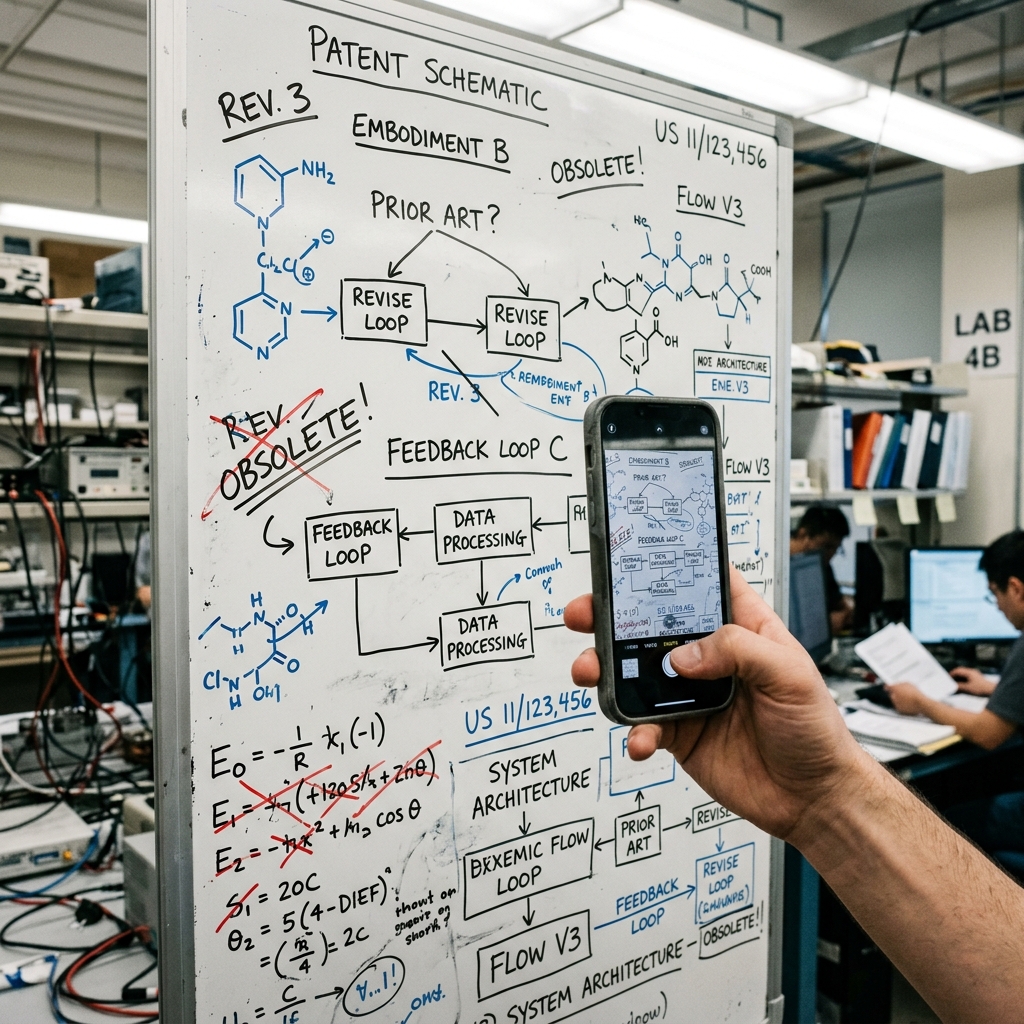
They had photographed whiteboards during inventor meetings. Long whiteboards; the kind that are covered in branching diagrams and crossed-out formulas and the kind of shorthand that only makes sense to the people who were in the room for the three hours it took to fill it. And then they had typed out those photographs. By hand. Before uploading. Because the tool would not accept an image.
Three attorneys. Independently. Describing the same workaround. That is not a coincidence or a skill gap or a training issue. That is a design failure with a consistent human cost that nobody who built the tool apparently sat down to calculate.
The format is the tool's problem to solve. Not the attorney's problem to work around before the work can begin.