My friend talked for eleven minutes about Emirates. She did not mention the engine once.
One half of this article is entirely in the human world. The other half maps it exactly onto AI products. The insight only appears when you hold both halves at once.
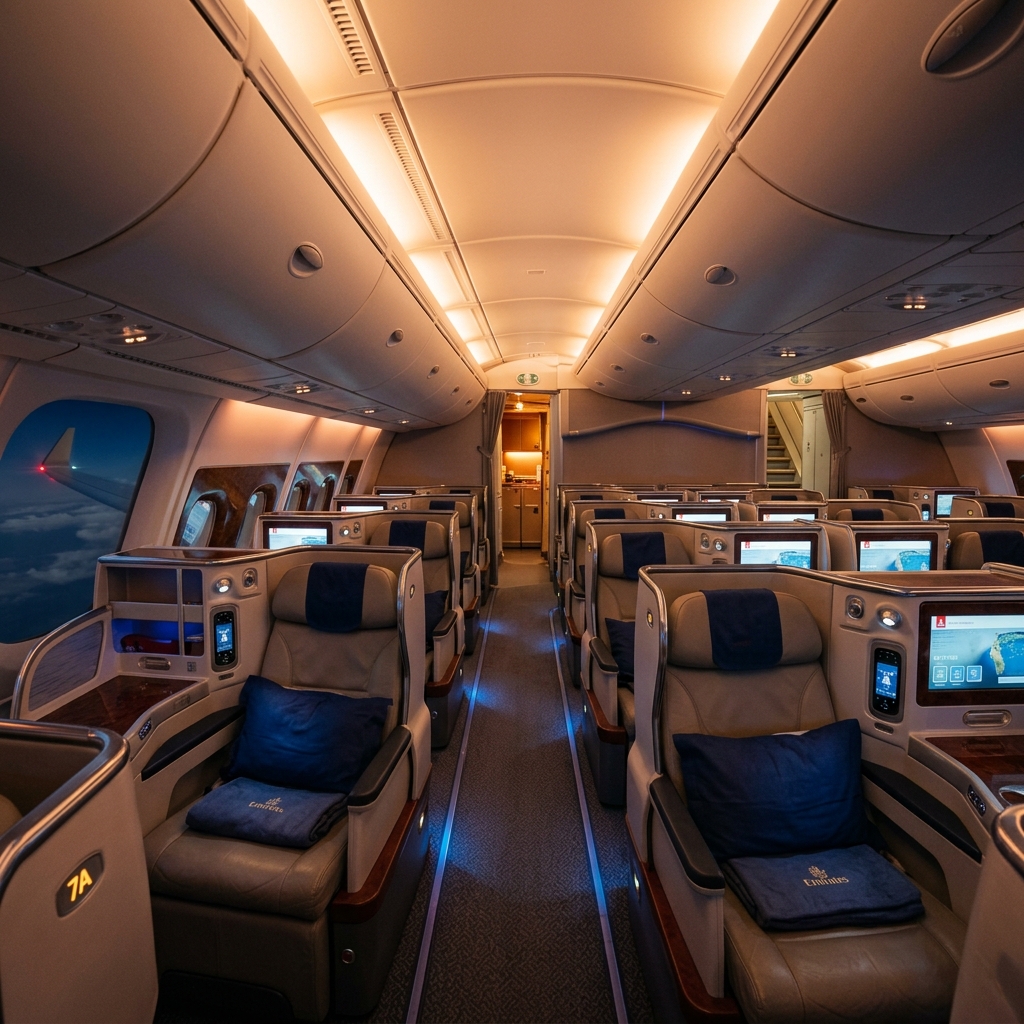
She had just returned from Dubai on Emirates. She talked for eleven minutes. Not eleven minutes of general impression. Eleven minutes of specific, sequential, fully formed observation. The seat. She described the angle of the recline; not to flat, but past flat, like the aircraft had decided that horizontal was merely a starting position. The chicken option that was actually good; not airline-good, but actually good, the kind of good that makes you want to tell someone about it. The air hostess who smiled like she meant it; not the professional smile that arrives on cue and departs the same way, but the kind that suggests the person behind it is having a slightly better day than the job usually allows. The way the cabin felt quiet even though there were four hundred people in it. Eleven minutes.
Then I asked her one more question.
"Do you know which jet engine the aircraft was using?"
She looked at me the way people look at someone who has said something so complete disconnected from the conversation that they need a moment to establish it was not a joke.
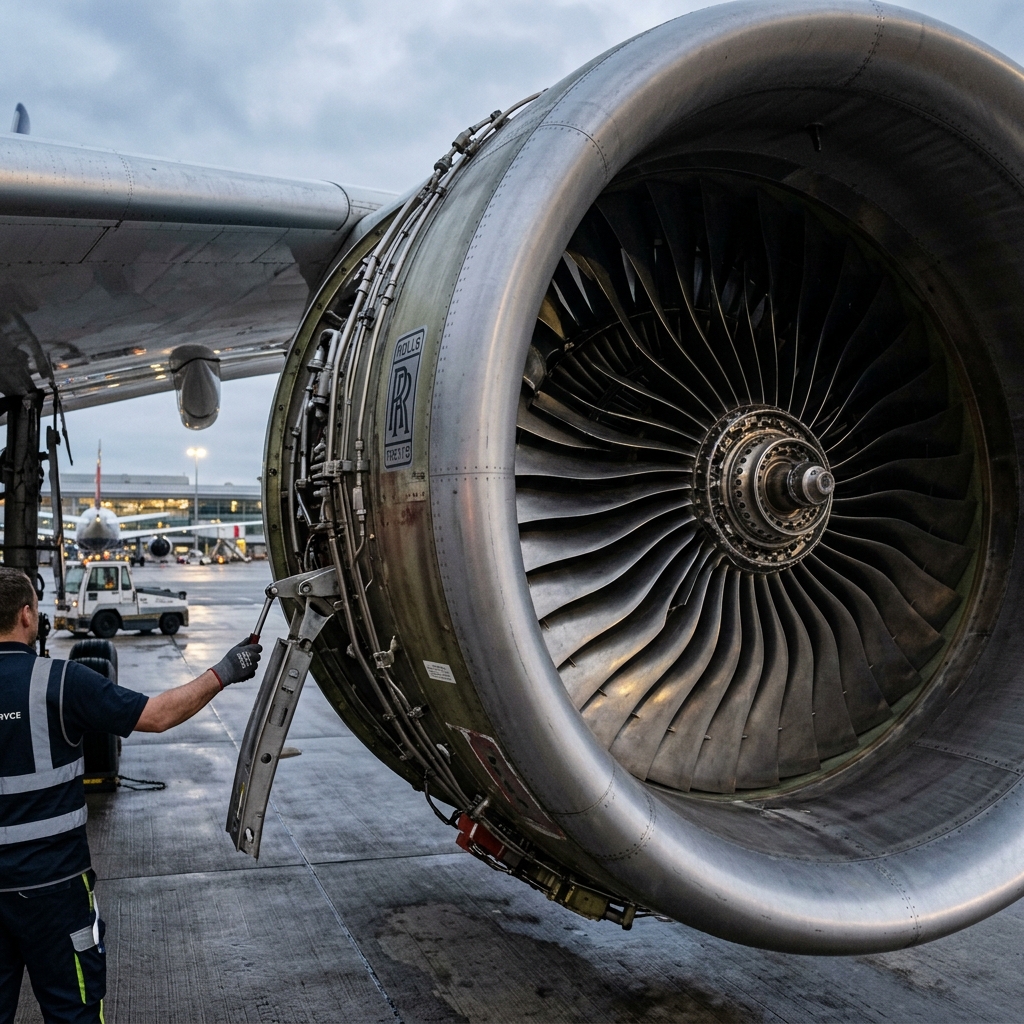
The aircraft was powered by a Rolls-Royce Trent 1000. One of the most sophisticated pieces of engineering on the planet; nearly thirty years in development, capable of generating sixty-five thousand pounds of thrust while meeting emissions standards that would have seemed impossible a generation earlier. The engineers who built it spent decades perfecting combustion ratios, blade tolerances, the aerodynamics of turbine performance at thirty-five thousand feet.
My friend noticed none of it. She noticed the chicken.
I am not sure why I still think about this. Maybe it does not matter.
She was not being incurious. She was being a passenger.
It reminded me of a time last month in Bangalore. I spent 45 minutes stuck in traffic near Indiranagar, paying Rs 350 for an auto-rickshaw ride while the driver passionately pitched me his cousin's cloud kitchen startup that exclusively sells square idlis. We remember the human experience, not the vehicle.
The engine's job was to be so reliable, so completely invisible, that she never once had to think about it. The engine succeeded completely. The cabin was what she experienced. The cabin was the product.
"The technology is the engine. The experience is the airline. Most AI companies today are building extraordinary engines and then forgetting to design the cabin."
Every AI builder right now is in a race to build a better engine. GPT-5 versus Claude. Benchmark scores published with the energy of sports results. Token speeds. Context windows. Parameter counts that mean nothing to any human being who is not already in the room where these conversations happen. We write about it; we debate it; we post comparison tables on LinkedIn :)
And the person actually using the product?
The patent attorney who needs to understand whether this invention is novel before the filing deadline. The radiologist trying to find the thing they almost missed in seven hundred scans. The financial analyst building a model that other people's jobs depend on. The teacher trying to understand why one student is not following when twenty-nine others are, which is a completely different context but the underlying anxiety about whether the tool is actually helping or just generating more noise is basically the same.
They are asking exactly one question: "Does this feel like it understands what I need?"
Not: "What model is running underneath?" Not: "How does this benchmark against the competition?" Just: "Does this feel like it gets me?"
This gap... this is what I call the Experiential Architecture problem.
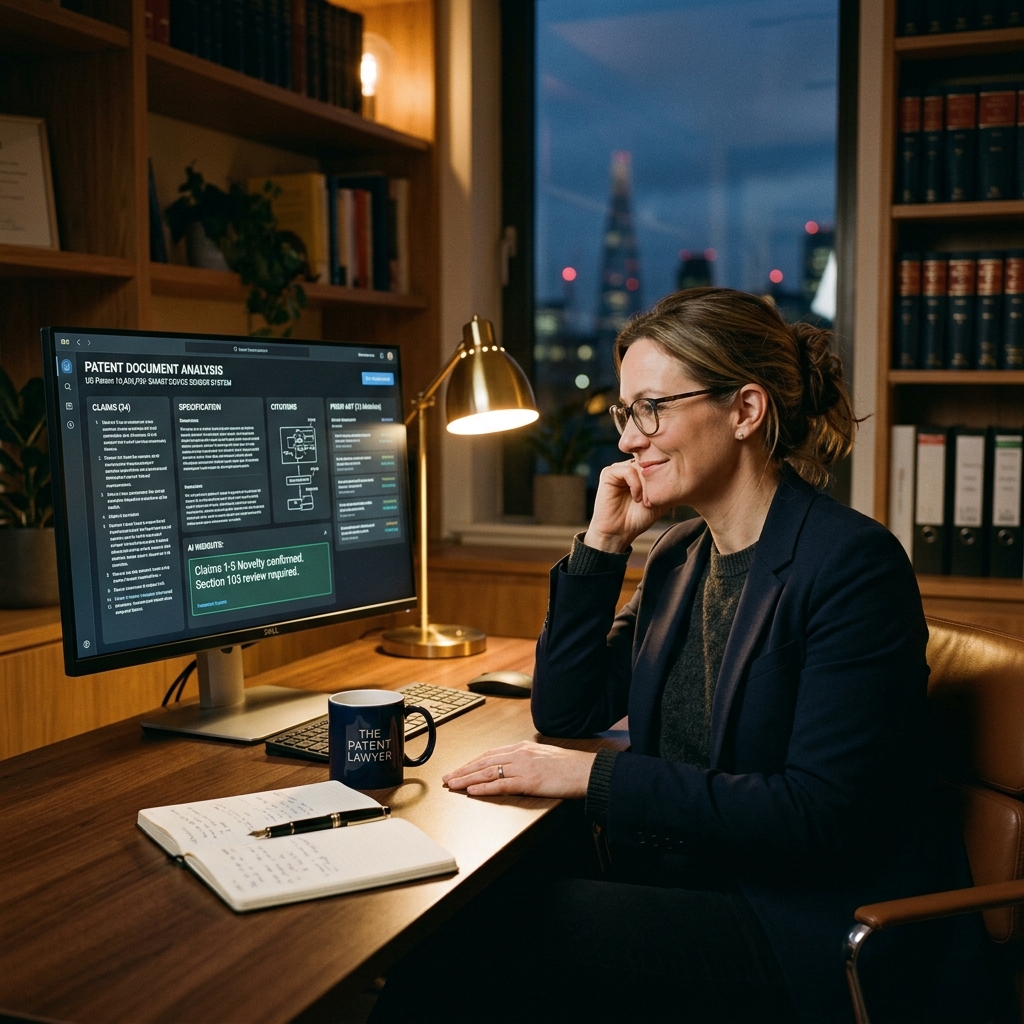
I have made this mistake myself. Early builds of eety were technically impressive. The invention understanding was deep; the claim logic was sound; the prior art analysis was more thorough than most attorneys had time to do manually. I was proud of it. My co-founder was proud of it. We would sit in demos and watch the outputs and feel that specific quiet satisfaction of watching something work correctly.
And then a patent attorney sat down with it and said, after about eight minutes: "It doesn't feel like it gets me."
Eight words. That sentence cost us three months and a complete rethink of the product surface. Not the model. Not the accuracy. The surface. The moments where the tool speaks to the attorney; the questions it asks, the confidence with which it presents uncertainty, the way it frames what it has understood and what it needs to understand better. The cabin. We had been so focused on the engine that we had forgotten to design the cabin entirely.
Experiential Architecture starts from the opposite end. You begin not with the technology but with one question: what does this expert feel at the exact moment they use this tool? Do they feel heard? Do they feel capable? Do they feel like the tool was built specifically for how they think; not for how a generalist thinks, not for how a computer scientist thinks, but for how a patent attorney at 11pm on a Tuesday thinks when they have a filing due on Wednesday?
And then you work backwards. You find the technology that makes that specific feeling possible. The engine becomes invisible. On purpose. Not because it is unimportant; it is crucial. But because the expert should never have to think about it.
You do not know the compression algorithm your music app uses. You just know the song started instantly. You do not know the database powering your food delivery app. You just know the biryani arrived hot. You do not know which LLM is reading your patent disclosure. You just know it understood the invention better than you expected; that it asked the right follow-up question; that it felt, for a moment, like working with someone who actually understood what you were trying to do.
That is the goal. That is the product.
The engine should never be the story. The experience should never be an afterthought.
My friend spent eleven minutes telling me about the cabin. She did not once mention what was keeping the aircraft in the air. The Rolls-Royce engineers would consider that a complete success. That is the standard. :)