This Does Not Feel Like Your Code. And That Is Okay.
A friend looked at my application and said the code did not feel like mine. She was right. I found the same argument in a box of old inland letters. And I think I know how it ends.
She was looking at something I had built. She had known my code for years. The structure was different. The comments were different. The function names had a particular tidiness that I do not naturally tend toward. It was clearly written with AI assistance; and she could tell.
She was not wrong. It did not feel like mine.
I did not have a quick answer for her. So I sat with the question for a while. And then, a few days later, I found an old box from my first year of college.
It was from my time in Pune, where I spent three years living in a 200-square-foot room that cost Rs 4,500 a month, sharing it with a guy named Rahul who insisted on keeping his collection of empty Thums Up bottles lined up against the only window.
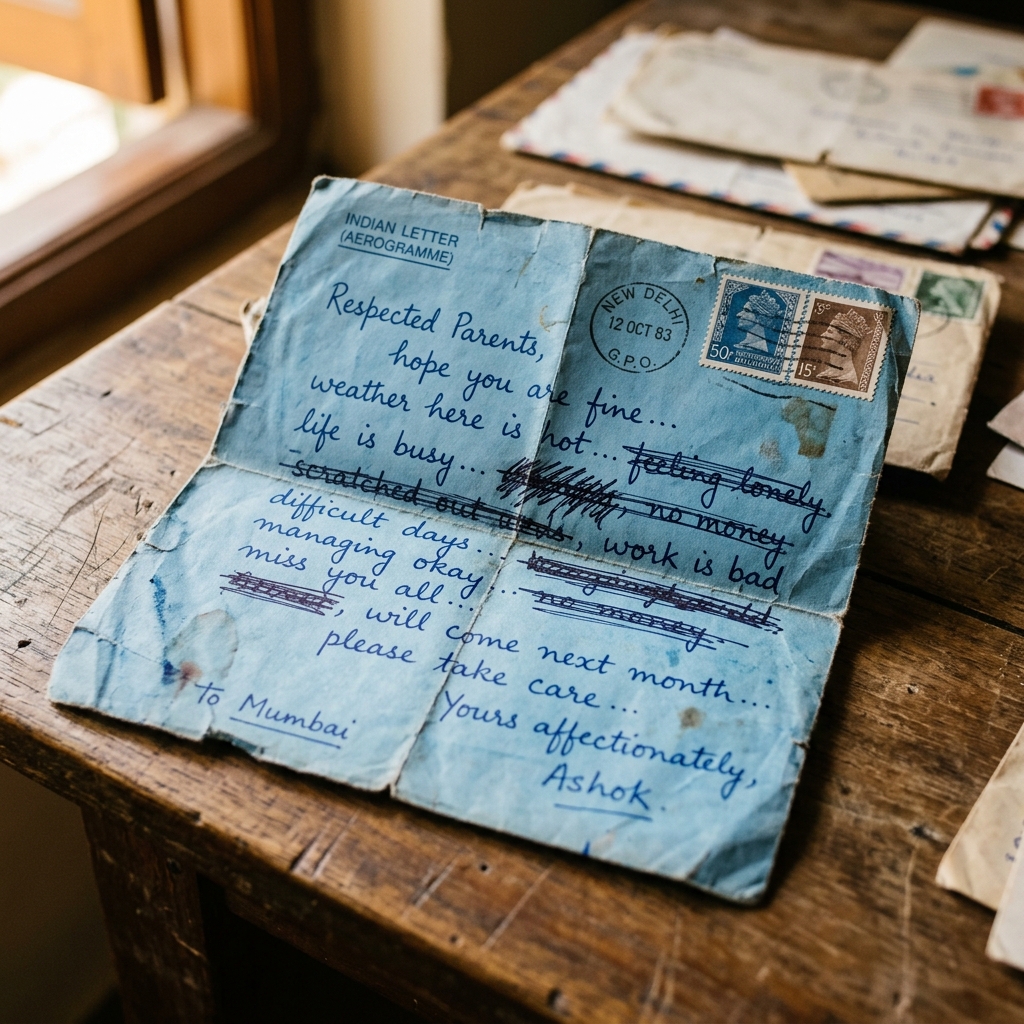
Inside it: blue inland letters. Folded three ways, slightly faded, the kind that came before WhatsApp made distance disappear. I read a few. The handwriting was mine but younger; uneven, the pen pressing harder in some places than others. And here and there: words completely darkened out by frantic scratching; something I had written and immediately regretted. You could still see, faintly, the shape of the word underneath.
That scratch... that imperfect, irreversible, human-scaled mistake... was more me than any paragraph I have written since.
When we wrote letters, every word cost something. A mistake cost ink and time, not a keypress. You chose differently when the cost of choosing was higher.
I thought about what we lost when communication evolved. Not the sentimentality of it; I mean the specific things, the concrete ones:
- Waiting for the phone to ring after 8 PM because STD calls were half price and your friend from another city only called on Saturday evenings.
- Saying "meet me at Priya Village at 4 PM on Friday" and then actually going there; no tracking, no updates, just faith that the other person would show up.
- Posting a letter that would take fifteen days to arrive; then waiting another fifteen for the reply. A month for a conversation that WhatsApp completes in four minutes.
Those things are gone. Genuinely gone. I do not think we will get them back and I do not think we should should want to.
Because look at what arrived instead. Friends on the other side of the world, visible on a video call whenever you like. An hour-long conversation with your parents, costing nothing. Real-time knowledge of whether someone made it home safely. The ability to share something that made you laugh with the person you most wanted to share it with, immediately, without waiting for the next time you were in the same city.
The gains are real. They are larger than the losses. I genuinely believe this; not as a technology optimist performing optimism, but as someone who has used both the inland letter and the video call, and knows what each one actually does.
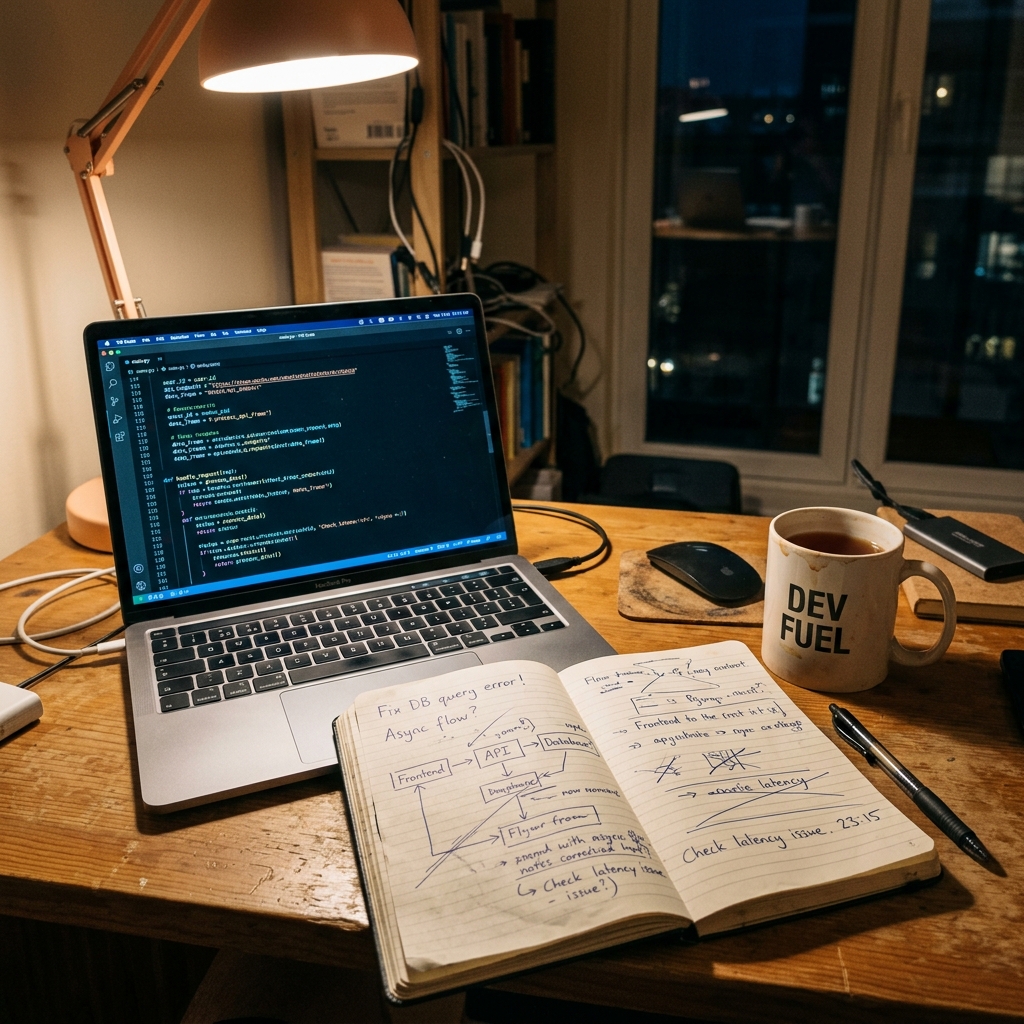
My friend's comment came back to me when I was looking at those letters. This does not feel like your code. She was saying exactly what I felt when I compared the inland letters to a WhatsApp message. The medium changed; and something that felt personal got smoothed out in the translation.
But here is the thing I keep returning to. The WhatsApp message still carries the thought. The intention. The relationship. What it lost was the evidence of the struggle to express the thought; the scratched-out words, the uneven pressure of the pen, the waiting. Those things were signs of the effort; not the effort itself.
AI-assisted code is structurally similar. What changed is the evidence of the process. The particular way I name things when I am building fast and not thinking about it. The idiosyncratic comment that only makes sense given the specific rabbit hole I went down at 11 PM. The function that is slightly too long because I wrote it in one session and did not refactor it. These are all gone; smoothed out by a tool that has no idiosyncrasies and keeps impeccably clean comments.
But the problem it solves? Still mine. The decision about which problem to solve? Still mine. The judgment about whether the output is right? Well, that part is getting a little blurry, and I am genuinely not sure what that means yet for the people doing the actual work. The application is still me. The handwriting is just different.
Two years ago, building an application that worked took me months. Today I can build one over a weekend, launch it, and then watch it fail; which is genuinely more valuable than the alternative of spending months on something and then watching it fail. The speed of failure is, it turns out, a form of progress.
We are having the inland letter conversation about AI right now. It does not feel personal. It does not feel real. It does not feel like you. These are real observations. I am not dismissing them. But I have seen this conversation before; and I know that the people making it are not wrong about what was lost. They are simply underestimating what is coming in exchange. The same silence happened in that meeting room — and the answer there is the same as it is here.
The feeling of waiting for the 8 PM call is gone. But I can see my mother's face whenever I want. And she can see mine.
The handwriting in my code is changing. But the thing I am building is still, unmistakably, mine. :)