
The Companies That Do Not Fake It Are Losing the Race.
Engineer.AI had 1,000 engineers in India building what it claimed AI was building. Amazon's "Just Walk Out" had 1,000 humans in India watching your camera feed and adding items to your cart. The companies that honestly build the technology and admit its limits... those are the ones falling behind. This has to stop at the due diligence stage.
"Fake it till you make it." A young chap told me this quite casually recently. I am not a supporter of the philosophy... but I am aware that a large number of startups operate by it. The question I find more interesting is: where does faking become fraud? And who is responsible for drawing the line?
I have two documented cases that I keep coming back to.
I am not sure why I still think about this. Maybe it does not matter.
These are not small companies making exaggerated LinkedIn posts. Engineer.AI raised over $29 million. Amazon is one of the largest companies in human history. If they calculated that faking the technology was worth it... for valuations, for stock price, for competitive positioning... then the incentive structure has a serious problem.
I saw this at a much smaller scale in Pune last year. I was consulting for a logistics firm for three weeks, and they were paying Rs 85,000 a month for an "AI routing engine." It turned out to be a guy named Amit sitting in a back room with Google Maps and a laminated spreadsheet, manually texting drivers.
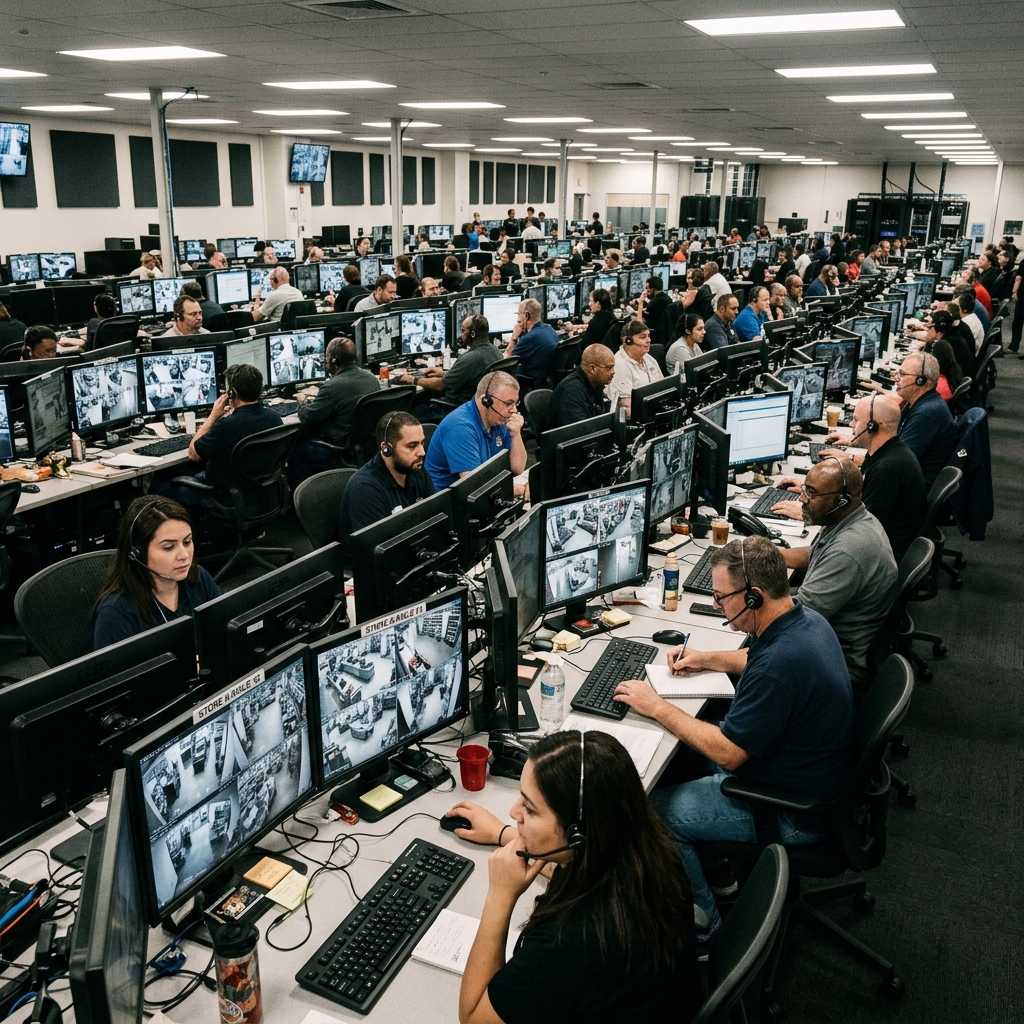
The companies that genuinely build the technology... that are honest about its capabilities and limitations... they lose the race. They do not claim things they have not done; so obviously they will always appear to be behind the companies that only need to claim and do not need to deliver.
Actually, I realise this is a tangent.
I do not fully understand why companies like Amazon do it. It is not purely competitive... Amazon is not losing to a startup in cashierless retail. My best guess is that radical innovation announcements serve stock prices; that the AI story is for the market, not the customer. But I am not certain. What I am certain of is the outcome.
We are a deep tech firm. We have raised a couple of rounds. In every due diligence process I have been through, the split has been roughly the same.
I am not saying every company that raises capital is dishonest. Most are not. But the ones that are... the ones running a performance of AI rather than building it... they benefit from a system that does not look closely enough. And the cost of that is paid by the companies that do the work quietly, honestly, and without the theatre.
The fix is not complicated: VC firms investing in tech-first companies need to have, or hire, people who can actually evaluate the technology. Not just the deck. Not just the demo. The code, the architecture, the data pipelines, the model performance on held-out tests. If that becomes standard, the playing field changes immediately. Right now, the incentive points entirely the other way.