"I Think You Should Buy From Our Competitor."
He had won the tender. He was sitting with the client, finalising the deal. And then he told the client to purchase from the competition instead. Ten years later, the same client came back with the biggest deal of his career... without a single question asked, and without a single round of negotiation.
It was 2004 and I was being trained for sales at Sify. The sales head gathered us and told us a story from early in his own career... from when he was a young man selling diesel generators on the road in Chennai, roughly 25 years earlier.
I still remember the training room in Taramani, Chennai. We had been sitting there for six hours straight, staring at a whiteboard that had Rs 45,000 written on it in fading blue marker, while the AC dripped condensation onto the regional manager's chair.
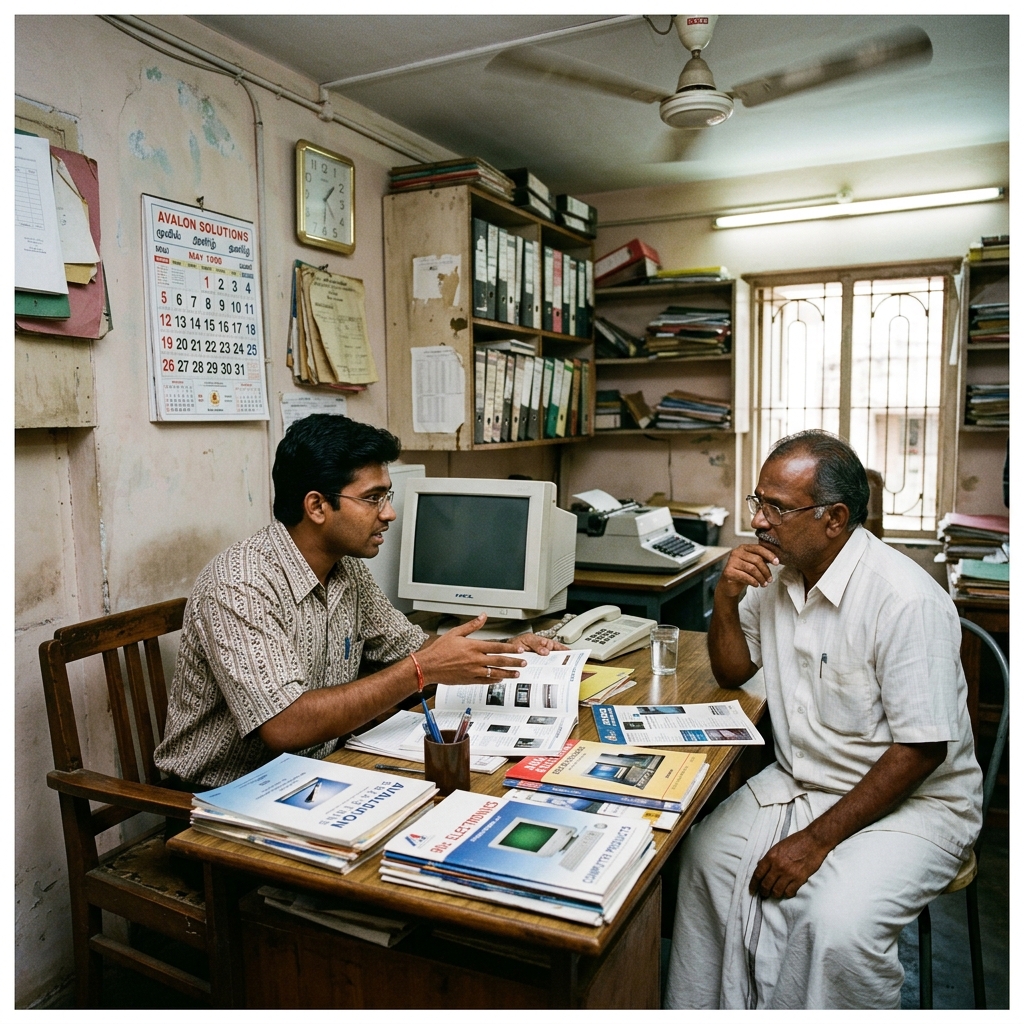
He had received a lead from Pondicherry. A printing press needed a generator. As it was a tender, he applied, competed, and was selected. He was sitting with the client, papers on the table, finalising the deal. And in that moment, he stopped.
He had realised something: a printing press needs its generator most urgently during the night shift, when newspapers are being printed. That is not a moment when you can wait for a service team. That is a moment when every minute of downtime costs the entire print run. And if something went wrong with the generator at 2 am, the math was simple.
He looked at the client and said it plainly.
The client understood. He purchased from the competitor. The salesman drove back to Chennai having lost the deal he had legitimately won. He did not dress it up; he did not follow up with a revised proposal or a special service guarantee. He simply said the honest thing and left.

He had lost that day. But he had won something that day that no commission or quarterly target could have bought... the kind of trust that does not depreciate over a decade. The kind that arrives with a bigger deal and no negotiation attached.
When the sales head finished the story, he added one line. He did not labour it; he said it the way someone says something they have always known.
I have not fully worked this out yet. But I am thinking about it more than I expected.
I have been in sales, in partnerships, in business development for more than two decades since that training. I have had moments where it was easier to win the deal today by not saying the uncomfortable thing. And I have tried, imperfectly, to remember Pondicherry. The client who received the honest advice and came back ten years later. The generator that was never sold and the relationship that outlasted it by a decade.
The math of relationships does not resolve in a quarter. It resolves over years. And the only way it works is if the interest you are genuinely defending, in the room, is theirs. It is the same reason I hire for trust over performance; the short-term numbers look the same, but the decade looks completely different.