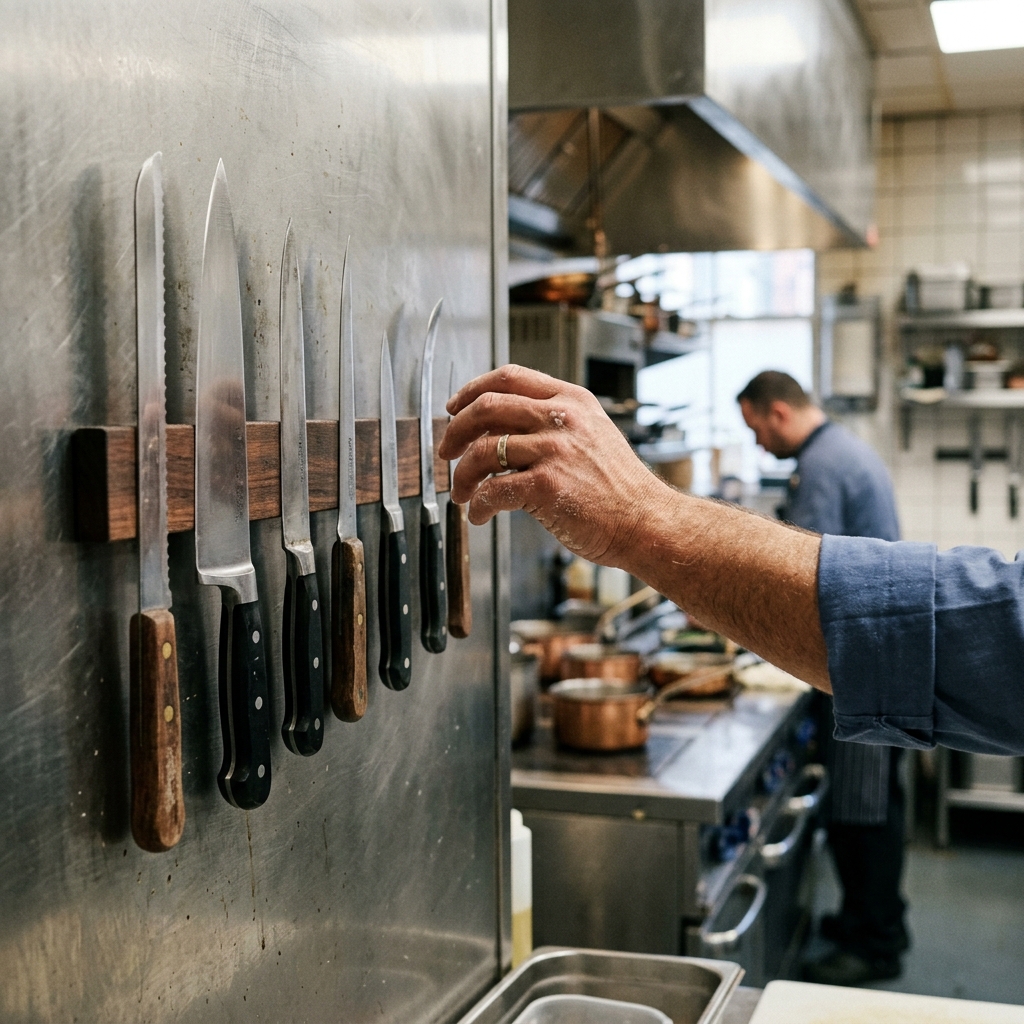
The Chef's Knife Problem
My chef friends switch knives seamlessly. At home, I use the smallest one for almost everything. The same comfort-over-correctness pattern is running inside your tech stack... and it is quietly consuming your margins.
I have a few friends who are professional chefs. When I visit their kitchens, I notice something that I never do at home: they switch knives constantly. A different blade for deboning, another for slicing, a small paring knife for detail work, a heavy cleaver for something that needs weight. The transitions are seamless; automatic, almost instinctive. They do not think about it. They reach for the right knife the way a programmer reaches for the right function.
At home, we have the full set. Six knives; different sizes, different shapes. I use the smallest one for almost everything. My wife uses the largest. We each picked the knife we were most comfortable with and never switched. The other four are very clean because they are almost never touched.
I saw this same dynamic playing out in a small kitchen in Pune last year. I sat there for three hours watching a head cook prepare meals for 450 people using a single, slightly bent Rs 150 knife, while a brand new set of German steel blades sat in a locked glass cabinet because the owner lost the key.
The reason is simple: comfort. The chef was trained to use each knife for its purpose. We were not. We defaulted to what felt natural; and that default stuck.
Now replace "knives" with "technologies." The same pattern is running inside most engineering organisations. And it is much more expensive than a slightly inefficient vegetable chop.
I am not sure why I still think about this. Maybe it does not matter.
A tech stack built around comfort is not an engineering decision. It is a training decision. Specifically; the training, or lack of it, of whoever led the team that built it.
My friend and I have been doing deep integrations with several customer systems recently. What we keep finding is infrastructure dominated by one language, one paradigm, and a completely random assortment of tools that someone read about on a blog once... applied to every problem regardless of whether those tools are actually suited to it. Here is what that looks like in practice:
The result: infrastructure and API costs so high they are consuming the entire profit margin of the business. Not because the technology is bad; because the wrong knife was used for the job.

Wait ... I am getting ahead of myself.
Why does this happen? There are two specific reasons; and both are structural, not accidental.
The fix is not complex. Before implementing any technology, every engineer... every one of them, from graduate to principal... should ask two questions:
There is a saying in Hindi that I keep coming back to when I see this pattern in the field:
First, you would not be able to kill it cleanly.
And even if you did... the chicken would not be edible.
The chef does not reach for the cleaver when the tomato needs slicing. The skill is not in knowing how to use all the knives. It is in knowing which one to reach for. The same principle applies to every tool that is currently being over-applied in engineering teams across the world. :)