"Papa, What Grade Would Make You Happy?"
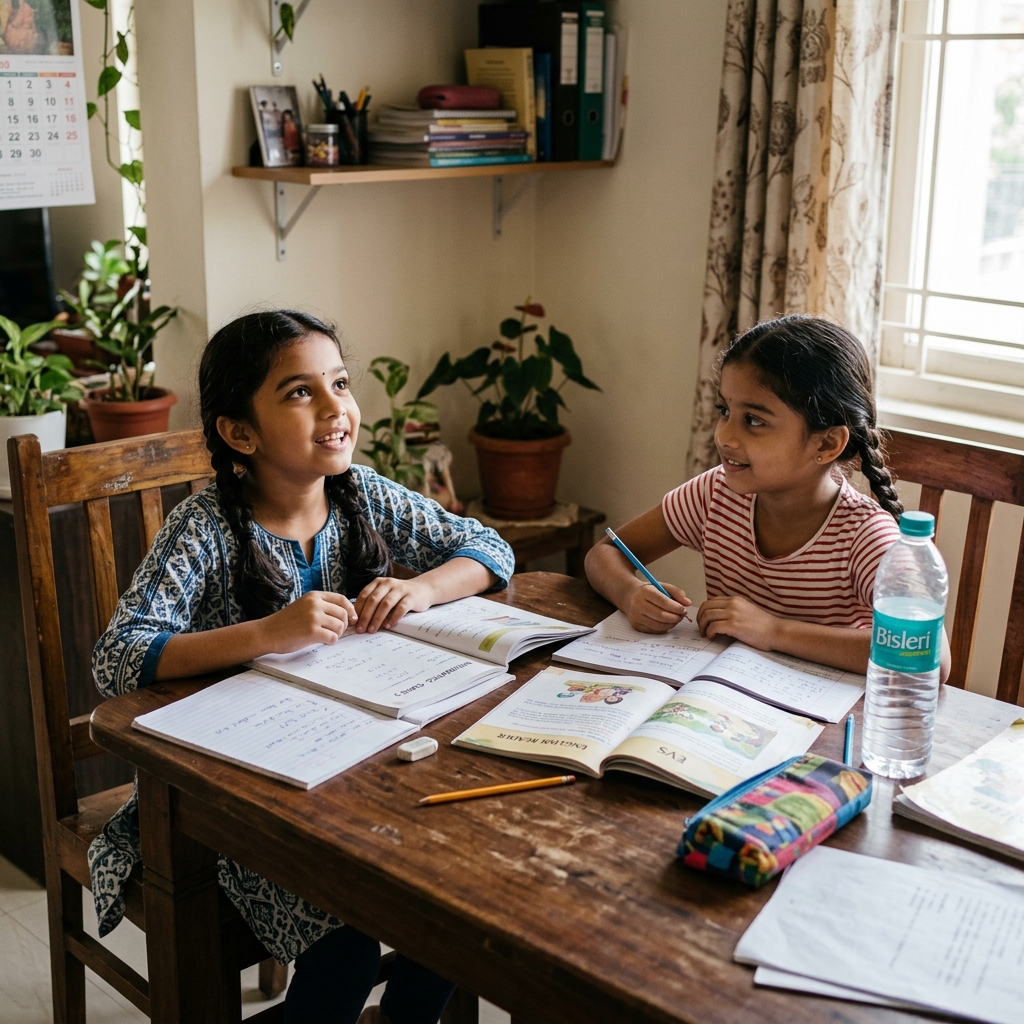
My twins are about to beign Grade 3 from Monday. The first thing they asked me was not about the syllabus. It was about what number on a report card would make their father happy. The question had more answers than either of us expected.
"Papa, what is the grade that you would be happy with?"
They asked this quite casually, over breakfast, as if they were asking what time we would leave for school. I put my tea down. My first instinct was to say a number. Something specific. Something they could write on a sticky note and put on the fridge. Get above 90. Or maybe 85. Or maybe just pass everything comfortably. The conditioning is deep; I caught myself reaching for a number before I had even thought about why.
What struck me was not the question itself. It was what the question revealed. They were not asking me about learning. They were not asking me about curiosity, or about whether I cared if they understood fractions or just memorised the steps. They were asking me to define a yardstick. A number. A line on a page that separates "Papa is happy" from "Papa is not happy."
Someone, somewhere, had already told them that success is a grade. I do not know who. It could have been a classmate, a teacher, a cousin, or just the air in the room when adults talk about school. But by the time the question reached me, it had already been framed.
And I had about four seconds to reframe it.
The question was not really about grades. It was about permission. They were asking: what do I need to do for you to not be disappointed in me? They are seven. That is a haevy question for seven.
Let me back up for a second. The exams are new this year. Grade 3 is when their school introduces formal assessments for the first time. And the parents' WhatsApp group has been... I do not have a polite word for it. Let me just say it has been active.
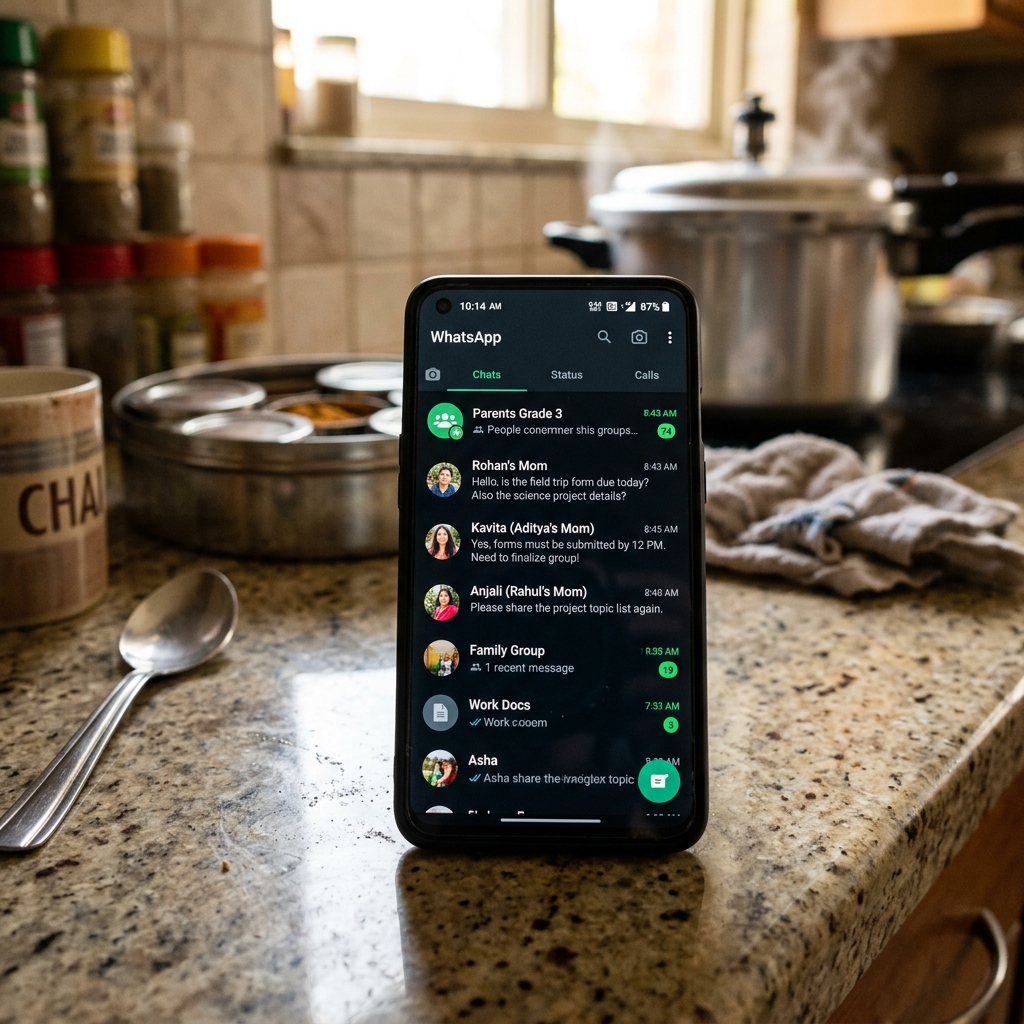
There has been so much conversation on that group about these exams. Which chapters will come. Whether the school is doing enough revision. Whether we should get extra tuitions. One parent in Goa told me she was already paying Rs 3,500 a month for after-school coaching for her daughter. In Grade 3. For a child who, as far as I can tell, was doing perfectly fine without it. Another parent quite casually mentioned that she had hired a "study planner" to create a revision timetable. For a seven-year-old.
The irony is this: by discussing exams so much, the parents are creating the exact pressure they are worried about. Nobody said once, in 200+ messages, "if the kids are learning, whether there are exams or not, how does it matter?" Not once. The conversation was entirely about marks, about which subjects are easy and which are hard, about whether science will have diagrams. About strategy. For seven-year-olds.
I realise I have been describing this as if I am above it. I am not. I caught myself, for one brief moment at the breakfast table, wanting to say "get above 90." Ninety. Why? What happens at 89 that does not happen at 91? What changes in my child's learning, her curiosity, her ability to think... if the number is 87 instead of 93? Nothing. Absolutely nothing. But the conditioning is so deep that the number was already forming in my mouth before my brain had caught up.
What we are doing, as parents, is staring at the thermometer and shouting at the child for having a temperature. Or worse: celebrating the child for having a normal reading, as if they had anything to do with it.
Actually, I want to be more precise about something. The exam itself is not the problem. Testing whether a child understands what they have been taught is a perfectly reasonable thing to do. The problem is what we have built around it. The coaching. The WhatsApp panic. The study planners. The anxiety that travels from parent to child like a virus that does not need physical contact.
I remember in one of the PTMs last year, I asked the teacher something that I thought was straightforward.
I may be misremembering the exact words, but the teacher paused for long enough that it mattered. It felt like an out of the syllabus question for her :)
And I do not blame her. She has 35 kids in her class and a curriculum to cover and parents who want to know whether their child got 18 or 19 out of 20 in a dictation test. Nobody is asking her to evaluate kindness. Nobody is giving her a rubric for empathy. The system she operates in does not have a column for "is this child a decent human being." It has columns for Maths, English, EVS, Hindi, and Computer. That is it.
Here is the thing I keep coming back to. When my daughters are 30, nobody will ask them what they scored in their Grade 3 science exam. Nobody. Not a single person on this planet. But the habits they form now... whether they are curious or just compliant, whether they learn to think or learn to perform, whether they associate education with discovery or with fear... those habits will be with them for decades. The grade will be forgotten before the summer holidays. The relationship with learning will not.
So what did I tell them?
I told them to learn something new every day and be kind to their friends. They looked at me like I had not answered the question. And honestly... maybe I had not. They wanted a number. I gave them a sentence. They wanted clarity. I gave them philosophy. I am not sure that was fair to them either; because at seven, sometimes you just need someone to say "this is good enough" so you can stop worrying and go back to being a child.
I do not know if I answered their question well. I told them the only thing I genuinely believed. But I could see them still looking for the number. And I found myself wondering... is the right answer a grade, or a sentence, or was the question itself simply a way of asking me for permission to relax? I keep coming back to this. Maybe because the WhatsApp group had 47 new messages by the time I finished breakfast, and not one of them was about whether the children were happy.